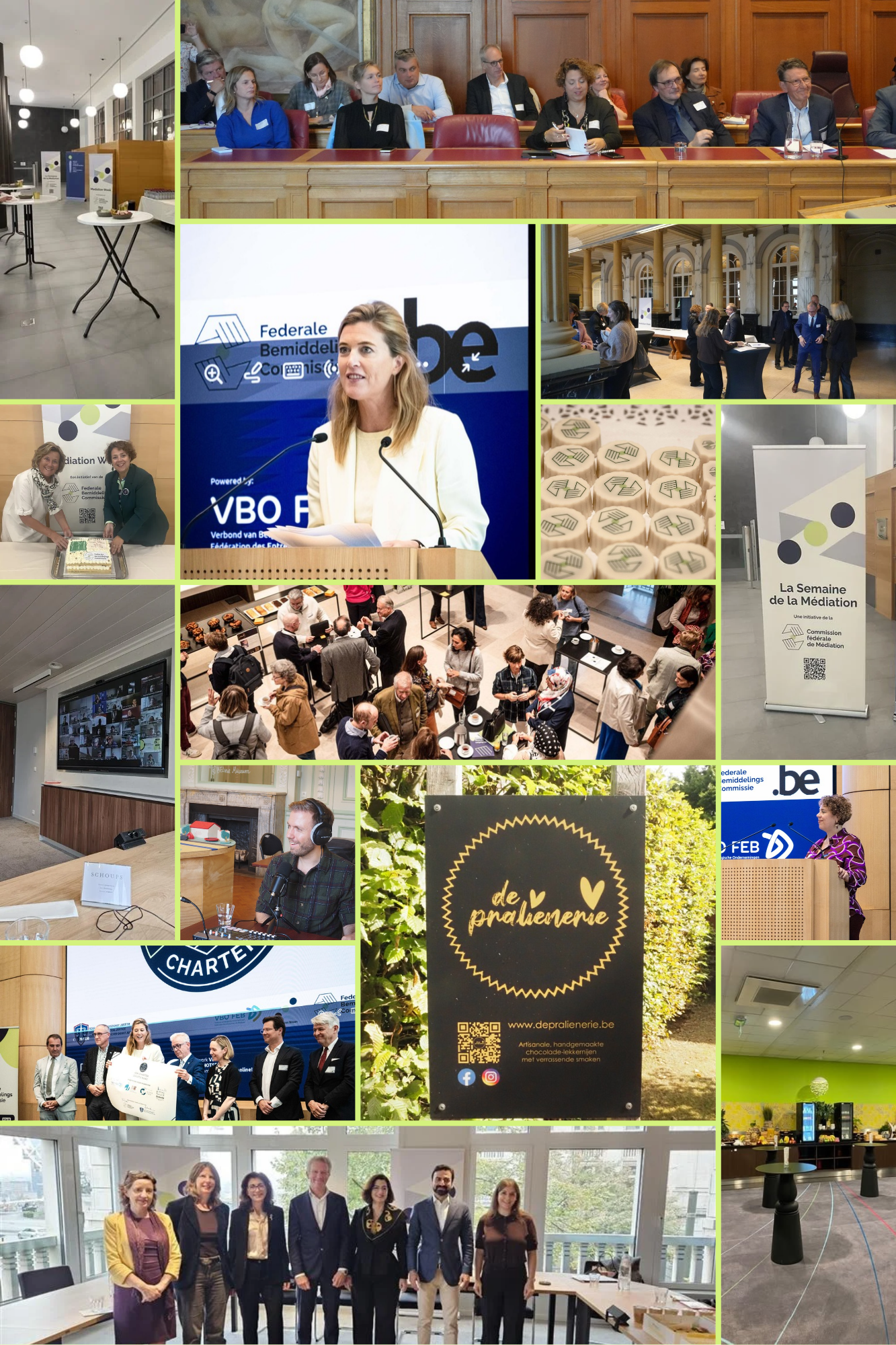
In 2025, the FMC unveiled a new front-facing identity, and such a milestone calls for a celebration. Every year, mediation is highlighted for an entire week, but to mark this anniversary, mediation was given centre stage for a whole month. For four weeks, mediators and other professionals could take part in training courses, awareness-raising sessions and workshops on ADR.
Off
2024
Off
2023
‘Mediation out of its infancy? What comes next?’
The well-known programme brochure underwent a major redesign. Or rather, a complete overhaul: the publication now spans no fewer than 136 pages. In addition to numerous local initiatives organised around the central day, the FMC worked together with 17 co-organising partners.
Off
2022
‘A major step forward for mediation? Perspectives from academia and practice’
The year 2022 stood in the sign of scientific research on mediation. During the central day, researchers from the University of Antwerp and the Vrije Universiteit Brussel presented the results of a large-scale survey among the Belgian population, as well as a study on the impact of the Waterzooi Act (2018) on mediation practice.
Off
2021
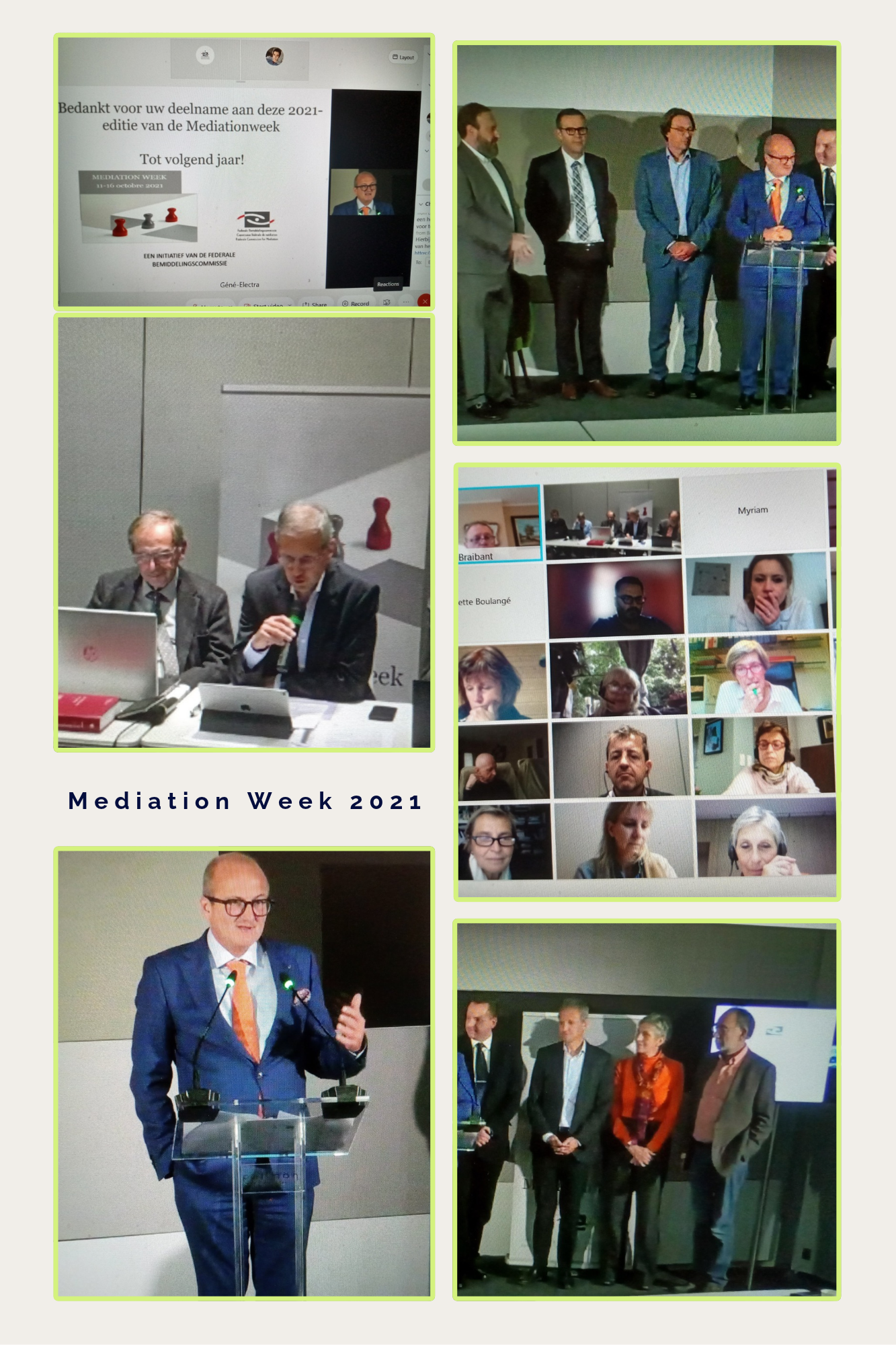
Hybrid became the new normal, including for the FMC during Mediation Week. Mediators and other interested participants could attend 22 events online, while 47 additional events took place in person.
Off
Are there specific mediators for certain types of conflicts?
Yes, accredited mediators often specialise in certain areas, such as family, social, civil or commercial mediation. There are also specific lists, such as for mediators with extensive expertise in construction-related conflicts. Our list of accredited mediators includes filters to find a mediator based on specialisation and location.
Off
2020
‘Innovation’
The COVID-19 pandemic disrupted everyday life worldwide. As a result, Mediation Week was forced to move entirely online. The virtual central day attracted around 500 participants, with Minister of Justice Vincent Van Quickenborne also making a brief on-screen appearance. In this digital context, it was particularly fitting that ‘innovation’ served as the common thread throughout the entire Mediation Week.
Off
2019
The programme booklet – by then an established annual reference for mediators seeking continuing professional development – continued to grow. The FMC was able to rely on the support of 72 partners, as well as Minister of Justice Koen Geens.
Off
2018
The initiative took on an international dimension. During the central day, French mediators Jacques Salzer and Jocelyn Hervé shared their insights into mediation practices within the French and Belgian business communities. In addition to a broad range of activities organised by local partners, participants at the central day could choose from 12 different workshops.
Off
2017
Building on the success of the first edition, the FMC showcased 61 mediation-related activities during the week surrounding the central day on 19 October, presented through an extensive programme brochure.
Off
2016
Together with the FMC, Barbara Gayse organised the first edition of Mediation Week: five days dedicated to mediation-related activities, primarily hosted in the WTC III building where the Commission is based. In addition to the FMC’s own programme, 35 local initiatives were organised.
Off
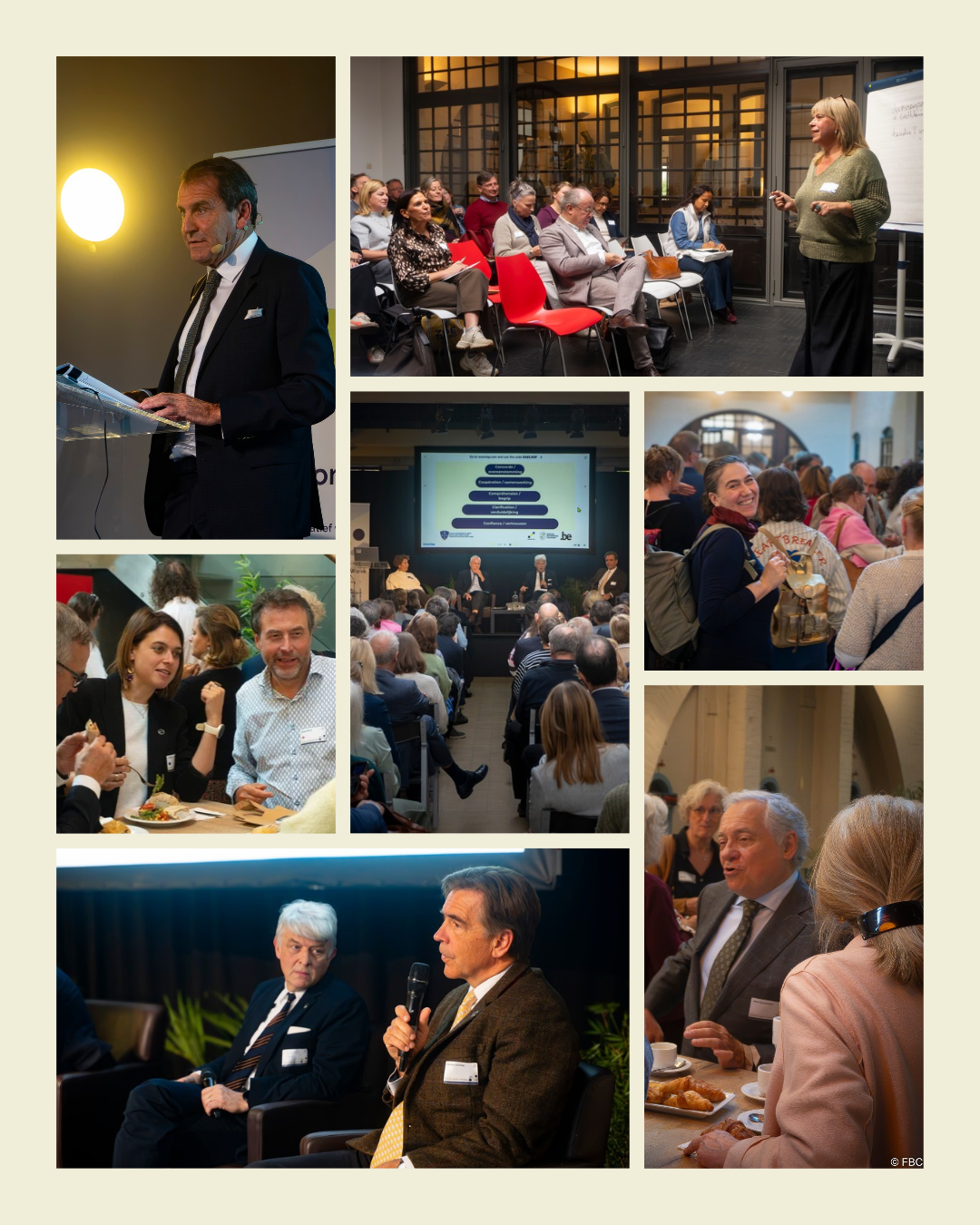
Mediation Week 2026 put accredited mediators in the spotlight. During the central day, the Federal Mediation Commission unveiled a new visual identity, including a quality label and accompanying communication materials to help accredited mediators showcase their accreditation. The day also provided opportunities for discussion, practical workshops and an international perspective on mediation. This edition helped raise the profile of accredited mediators and strengthen trust in high-quality mediation.
Mediation Month
In 2025, the FMC unveiled a new front-facing identity, and such a milestone calls for a celebration. Every year, mediation is highlighted for an entire week, but to mark this anniversary, mediation was given centre stage for a whole month. For four weeks, mediators and other professionals could take part in training courses, awareness-raising sessions and workshops on ADR.
‘Mediation out of its infancy? What comes next?’
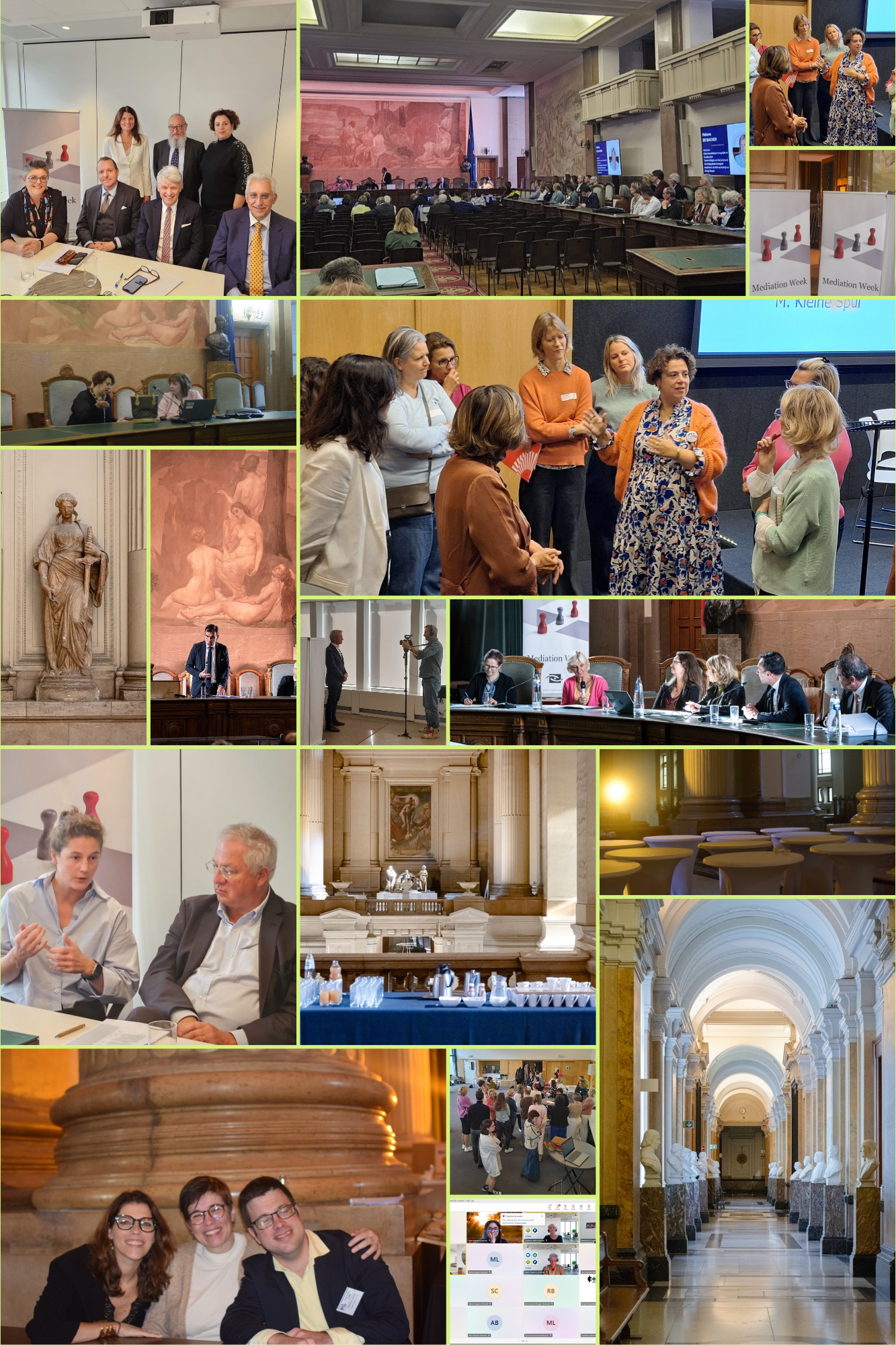
The well-known programme brochure underwent a major redesign. Or rather, a complete overhaul: the publication now spans no fewer than 136 pages. In addition to numerous local initiatives organised around the central day, the FMC worked together with 17 co-organising partners.
‘A major step forward for mediation? Perspectives from academia and practice’
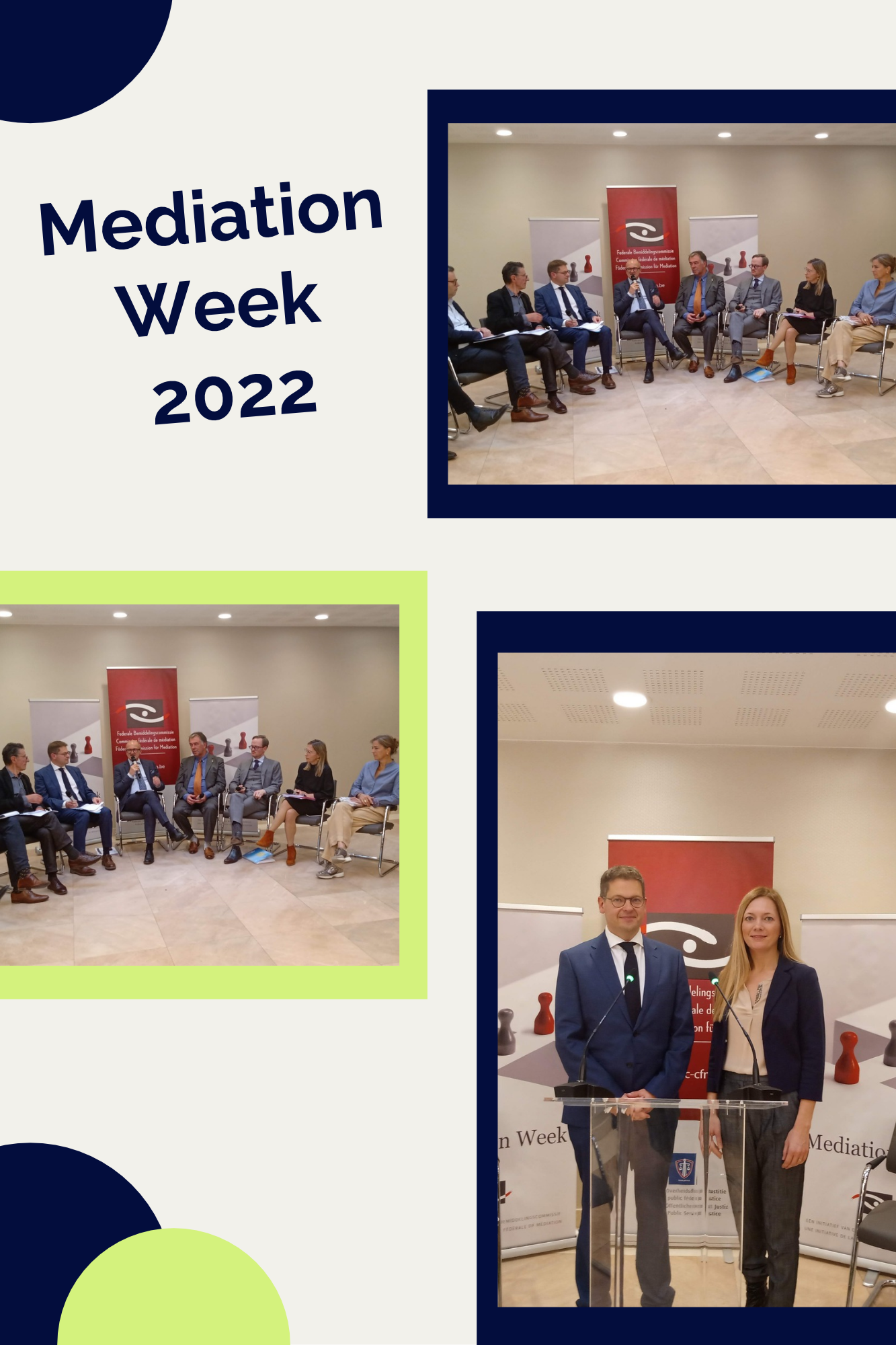
The year 2022 stood in the sign of scientific research on mediation. During the central day, researchers from the University of Antwerp and the Vrije Universiteit Brussel presented the results of a large-scale survey among the Belgian population, as well as a study on the impact of the Waterzooi Act (2018) on mediation practice.
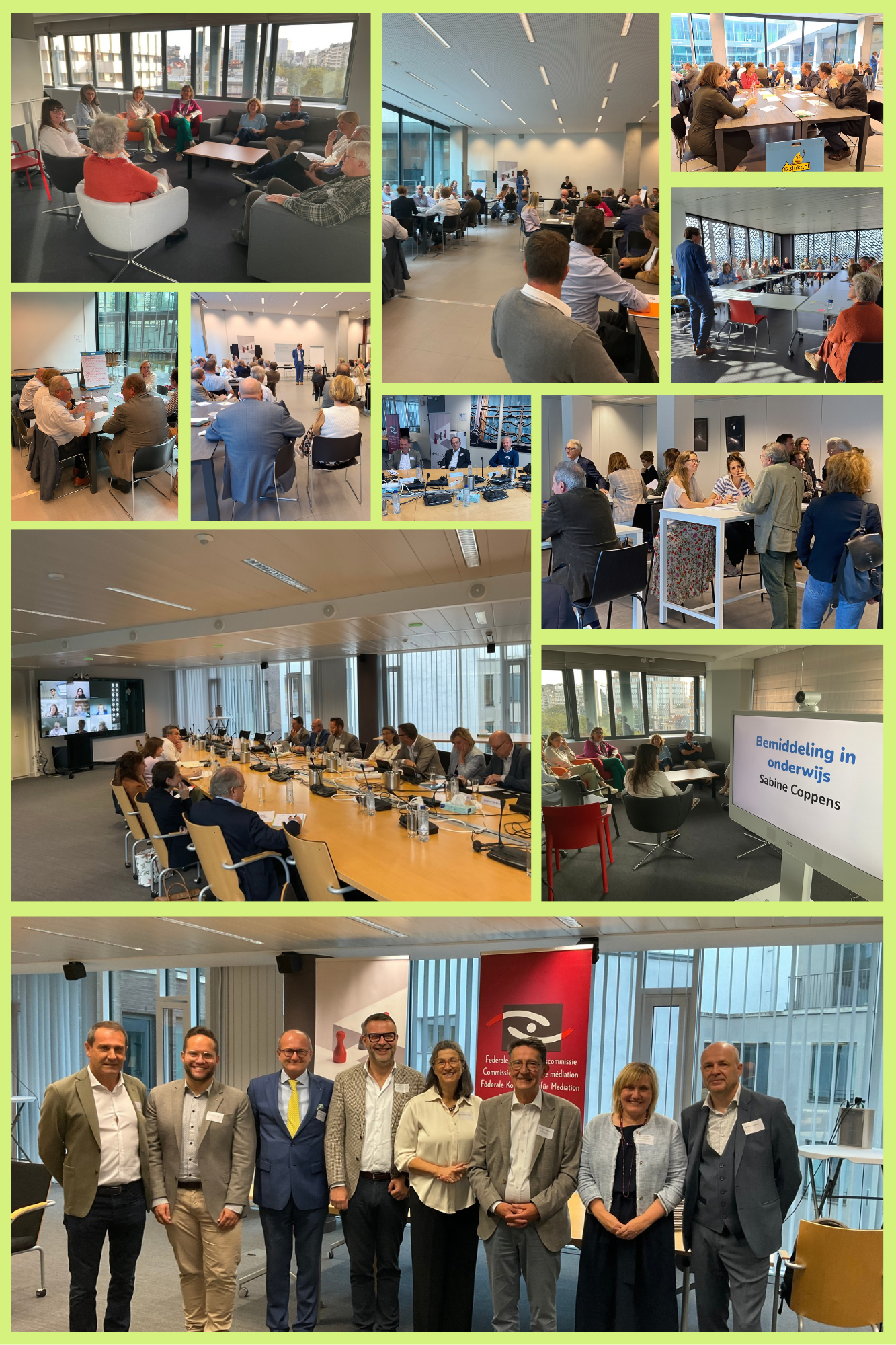
Hybrid became the new normal, including for the FMC during Mediation Week. Mediators and other interested participants could attend 22 events online, while 47 additional events took place in person.
‘Innovation’
The COVID-19 pandemic disrupted everyday life worldwide. As a result, Mediation Week was forced to move entirely online. The virtual central day attracted around 500 participants, with Minister of Justice Vincent Van Quickenborne also making a brief on-screen appearance. In this digital context, it was particularly fitting that ‘innovation’ served as the common thread throughout the entire Mediation Week.
The programme booklet – by then an established annual reference for mediators seeking continuing professional development – continued to grow. The FMC was able to rely on the support of 72 partners, as well as Minister of Justice Koen Geens.
The initiative took on an international dimension. During the central day, French mediators Jacques Salzer and Jocelyn Hervé shared their insights into mediation practices within the French and Belgian business communities. In addition to a broad range of activities organised by local partners, participants at the central day could choose from 12 different workshops.
Building on the success of the first edition, the FMC showcased 61 mediation-related activities during the week surrounding the central day on 19 October, presented through an extensive programme brochure.
Together with the FMC, Barbara Gayse organised the first edition of Mediation Week: five days dedicated to mediation-related activities, primarily hosted in the WTC III building where the Commission is based. In addition to the FMC’s own programme, 35 local initiatives were organised.
Assesses and accredits mediators in Belgium and abroad.
What if a client is unwilling to participate in mediation?
Mediation is a voluntary process. You can highlight its benefits and explain that it is often faster, cheaper and less stressful than legal proceedings. If the client still refuses, another form of support or legal action may be necessary. In some cases, a judge may still impose mediation as a first step.
Off
What if my client cannot afford mediation?
For clients with a limited income, pro bono mediation is available. This means that the government may reimburse all or part of the mediator's costs. A client can submit an application to the Bureau for Legal Aid (BRB) or through the court.
You can help your client by:
Checking their eligibility against the most recent income thresholds.
Referring them to a mediator who works pro bono (on the official list of accredited mediators, a filter can be used to identify mediators who offer pro bono services).
Explaining how they can file an application, for example through e-Deposit or at the court registry.
More information on pro bono mediation and its terms and conditions can be found in our brochures.
Off
As a OCMW or CAW employee, you can inform clients about the possibilities of mediation as an alternative to legal proceedings. You can refer them to accredited mediators and support them in preparing for the mediation process.
As a psychologist or job coach, you can inform clients about the benefits of conflict mediation, both personally and professionally. You can advise them on how mediation can contribute to finding constructive solutions and refer them to accredited mediators.
Mediation is suitable for clients who are willing to seek a solution together and who are open to dialogue. It is especially effective in conflicts where a long-term relationship (family, work, neighbours, business partners) needs to be preserved. If the conflict has highly escalated or if one party refuses to cooperate, mediation may be more difficult.
You can inform your client about mediation and explain how the process works. Then, you can help them find an accredited mediator through our official list of accredited mediators. In some court proceedings, a judge may also suggest or impose mediation.
It is useful to gather basic information about the conflict, such as the nature of the dispute and the parties involved. Mediators do not need a detailed file, but a short summary can help find the right mediator. You can also inform the client about costs and options for pro bono mediation, if financial resources are limited.
Judges can refer parties to mediation, either at a party's request or on their own initiative. They can make mediation mandatory in certain cases. If an agreement is reached, the judge can approve it, making it legally enforceable.
Yes, accredited mediators often specialise in certain areas, such as family, social, civil or commercial mediation. There are also specific lists, such as for mediators with extensive expertise in construction-related conflicts. Our list of accredited mediators includes filters to find a mediator based on specialisation and location.
Mediation is a voluntary process. You can highlight its benefits and explain that it is often faster, cheaper and less stressful than legal proceedings. If the client still refuses, another form of support or legal action may be necessary. In some cases, a judge may still impose mediation as a first step.
For clients with a limited income, pro bono mediation is available. This means that the government may reimburse all or part of the mediator's costs. A client can submit an application to the Bureau for Legal Aid (BRB) or through the court.
You can help your client by:
Checking their eligibility against the most recent income thresholds.
Referring them to a mediator who works pro bono (on the official list of accredited mediators, a filter can be used to identify mediators who offer pro bono services).
Explaining how they can file an application, for example through e-Deposit or at the court registry.
More information on pro bono mediation and its terms and conditions can be found in our brochures.
Referrers
As a OCMW or CAW employee, you can inform clients about the possibilities of mediation as an alternative to legal proceedings. You can refer them to accredited mediators and support them in preparing for the mediation process.
As a psychologist or job coach, you can inform clients about the benefits of conflict mediation, both personally and professionally. You can advise them on how mediation can contribute to finding constructive solutions and refer them to accredited mediators.
Mediation is suitable for clients who are willing to seek a solution together and who are open to dialogue. It is especially effective in conflicts where a long-term relationship (family, work, neighbours, business partners) needs to be preserved. If the conflict has highly escalated or if one party refuses to cooperate, mediation may be more difficult.
You can inform your client about mediation and explain how the process works. Then, you can help them find an accredited mediator through our official list of accredited mediators. In some court proceedings, a judge may also suggest or impose mediation.
It is useful to gather basic information about the conflict, such as the nature of the dispute and the parties involved. Mediators do not need a detailed file, but a short summary can help find the right mediator. You can also inform the client about costs and options for pro bono mediation, if financial resources are limited.
Judges can refer parties to mediation, either at a party's request or on their own initiative. They can make mediation mandatory in certain cases. If an agreement is reached, the judge can approve it, making it legally enforceable.
Yes, accredited mediators often specialise in certain areas, such as family, social, civil or commercial mediation. There are also specific lists, such as for mediators with extensive expertise in construction-related conflicts. Our list of accredited mediators includes filters to find a mediator based on specialisation and location.
Mediation is a voluntary process. You can highlight its benefits and explain that it is often faster, cheaper and less stressful than legal proceedings. If the client still refuses, another form of support or legal action may be necessary. In some cases, a judge may still impose mediation as a first step.
For clients with a limited income, pro bono mediation is available. This means that the government may reimburse all or part of the mediator's costs. A client can submit an application to the Bureau for Legal Aid (BRB) or through the court.
You can help your client by:
Checking their eligibility against the most recent income thresholds.
Referring them to a mediator who works pro bono (on the official list of accredited mediators, a filter can be used to identify mediators who offer pro bono services).
Explaining how they can file an application, for example through e-Deposit or at the court registry.
More information on pro bono mediation and its terms and conditions can be found in our brochures.
We acknowledge the traditional owners of the country throughout Australia and their continuing connection to land, sea and community. We pay our respect to them and their cultures and to the elders past and present.
What is the difference between a ‘training organisation’ and a ‘training centre’?
A training organisation is a natural or legal person seeking to provide training courses in accordance with the Training Regulations.
A training centre is a educational organisation specifically accredited by the FMC to provide basic and specialisation training courses. A training centre is formally accredited to offer the full pathway to becoming an accredited mediator.
The main difference is that a training centre has an officially accredited status to offer the full training programme, while a training organisation does not (yet) have that accreditation. A training provider that is not accredited as an official training centre can still offer continuous training courses. Each course must then be individually accredited by the FMC.
Off
Discover all local initiatives by focus area
Registration is required for each initiative. Please note the specific registration deadlines, which may vary depending on the activity. All practical information can be found in the description of each initiative. For any additional questions or further information, please visit the website of the organising partner or contact them directly.
(NL) Familiale dag: maandag 12 oktober
During Mediation Week 2026, we are bringing together a wide range of initiatives dedicated to mediation. Each day will focus on a specific area of mediation:
Monday 12 October: Mediation in family matters
Tuesday 13 October: Mediation in business and HR matters
Wednesday 14 October: Mediation in construction matters
Thursday 15 October: Central event day
Friday 16 October: Mediation in public sector matters
Some initiatives may not fully correspond to the focus of the day. In that case, this will be clearly indicated in the activity description.